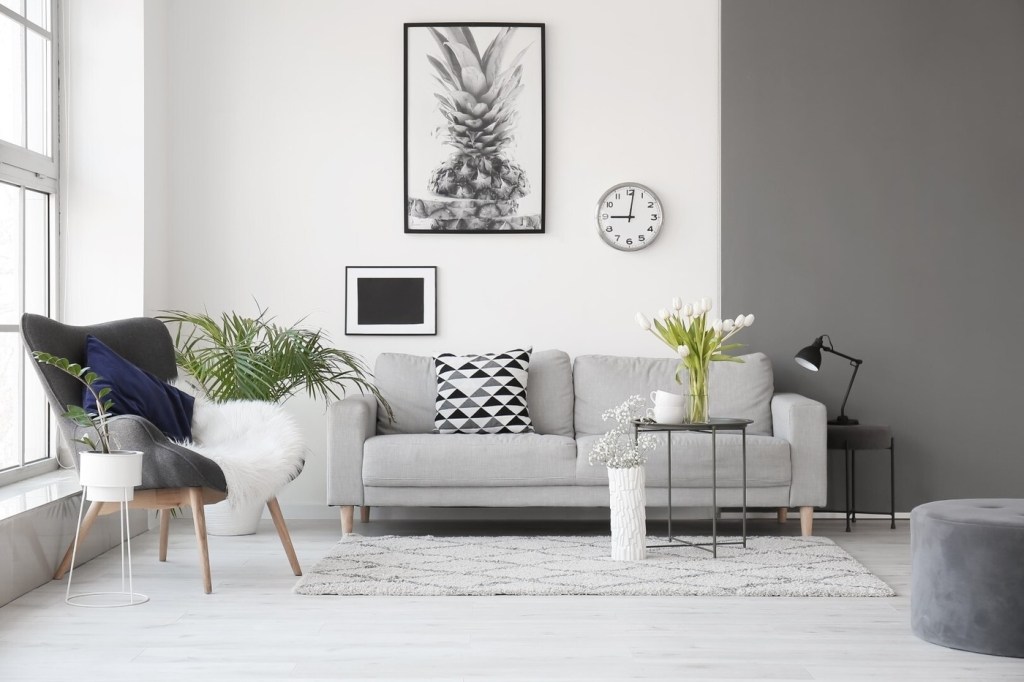
Why Design Principles Matter
Ever walked into a room that just felt right?
No clutter. No chaos. Just a sense of calm, style, and balance—even if you couldn’t explain why. That feeling? It’s no accident. It’s the silent magic of good design doing what it does best.
Behind every gorgeous, functional space is a blueprint of tried-and-true design principles—rules that guide where things go, how they relate to one another, and why certain rooms just work. These principles aren’t only for pros or magazine spreads. They’re tools anyone can use to transform a house into a home that feels intentional, beautiful, and unmistakably you.
In this post, we’ll break down the 7 essential interior design principles. These aren’t trends—they’re timeless truths that elevate any space, from tiny rentals to grand living rooms. Ready to design with confidence? Let’s begin.
The 7 Principles of Interior Design (Explained)
1 Balance
Balance is the distribution of visual weight in a space. It’s what makes a room feel stable and grounded.
Examples:
- Symmetrical: A classic arrangement—think twin lamps on either side of a bed or matching chairs flanking a fireplace.
- Asymmetrical: Mixing shapes and sizes—like balancing a sofa with a floor lamp and coffee table on the opposite side.
- Radial: Items arranged around a central point, such as dining chairs encircling a round table.
Quick Tip: Use matching side tables or balance a bulky sofa with grouped smaller objects—like an accent chair and a tall plant.
2 Harmony (Unity)
Harmony is what makes a space feel cohesive. It’s the invisible thread tying every piece together.
Example: A living room that layers velvet cushions, matte ceramics, and woven rugs—but sticks to a calm palette of sage, sand, and ivory—feels unified without being boring.
Quick Tip: Choose 2–3 core colors or materials and repeat them throughout the space to build visual unity.
3 Rhythm
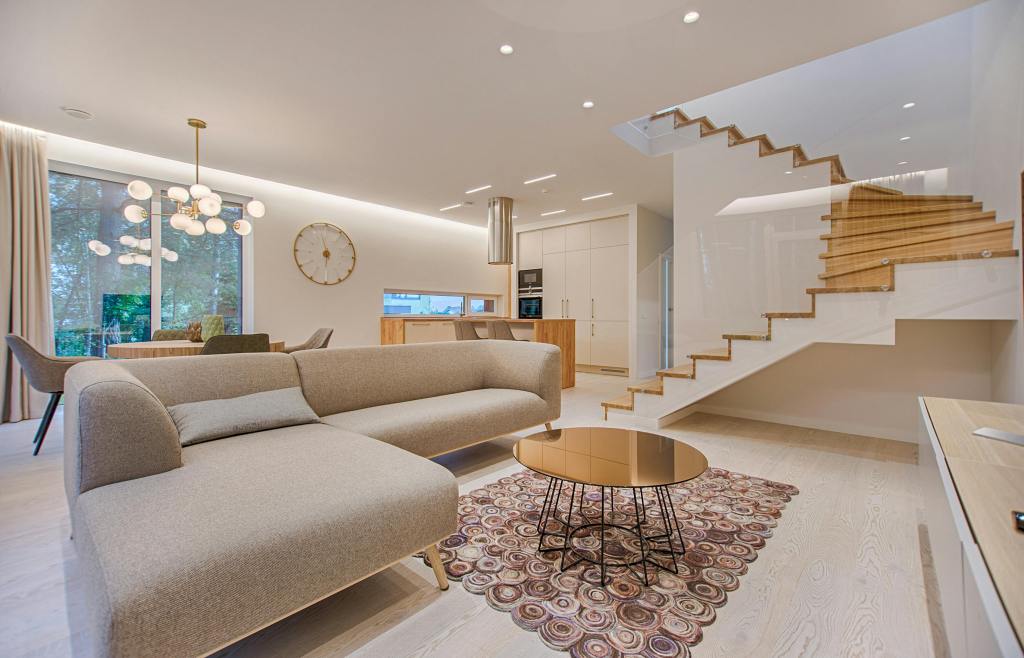
Rhythm is visual movement—how your eye travels through a room via repeated elements.
Example: Three vases on a shelf that gradually increase in height, or kitchen cabinets with uniform handles that create a sense of flow.
Quick Tip: Use repeating elements like throws, pillows, or picture frames to subtly lead the eye through the space.
4 Proportion & Scale
Definition:
- Proportion refers to how items relate to each other in size.
- Scale refers to how items relate to the space they’re in.
Example: A small loveseat in a large living room looks out of place—just as a giant sectional overwhelms a studio apartment.
Quick Tip: Always measure your furniture and your space before buying. What looks great online might dwarf your room IRL.
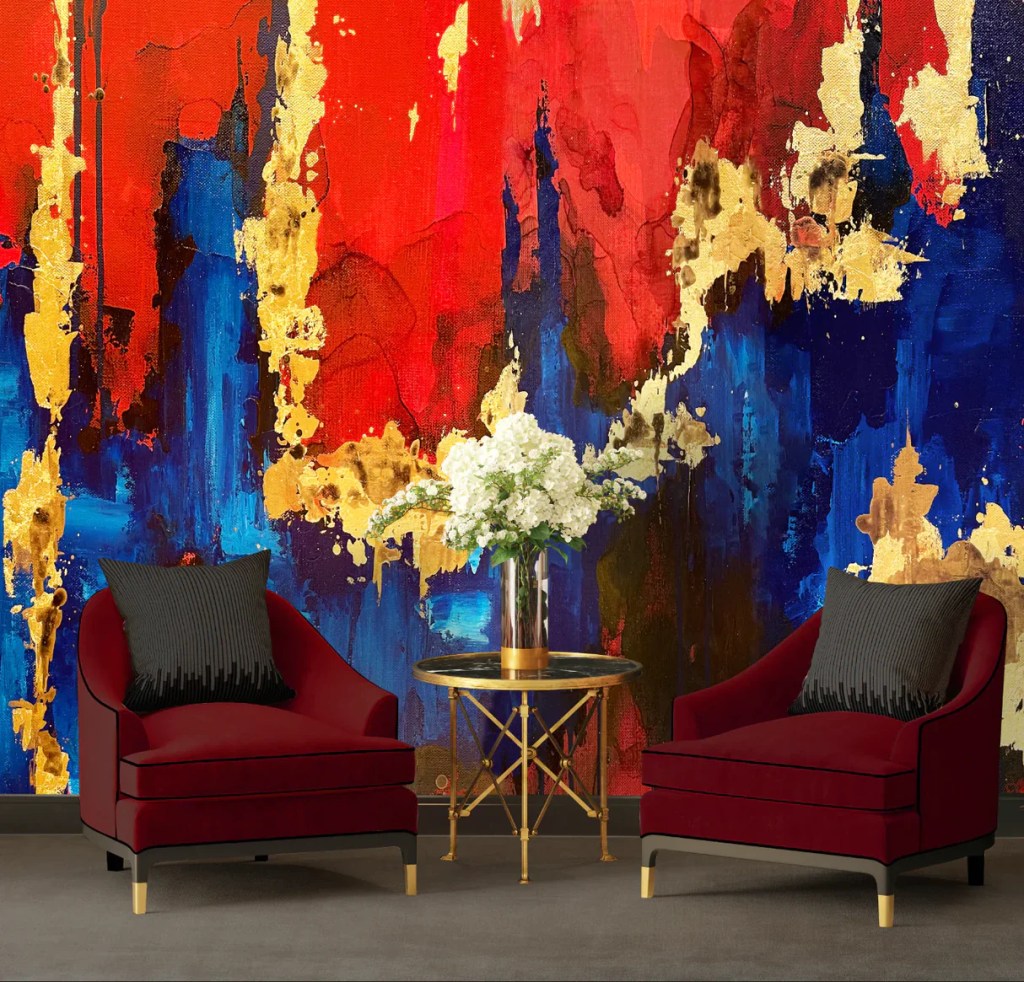
5 Emphasis (Focal Point)
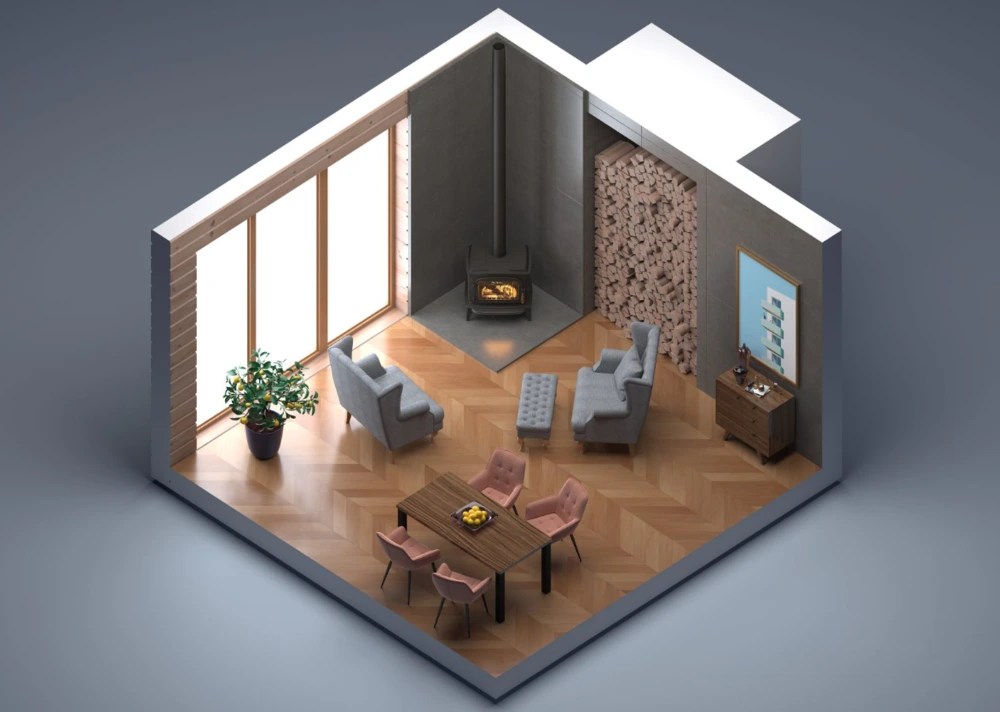
Emphasis is about creating a visual anchor—a single standout feature that draws the eye and gives the room purpose.
Example: A bold piece of artwork above the fireplace or a statement headboard in a bedroom. Everything else plays a supporting role.
Quick Tip: Let your focal point shine. Avoid cluttering it with too many competing pieces nearby.
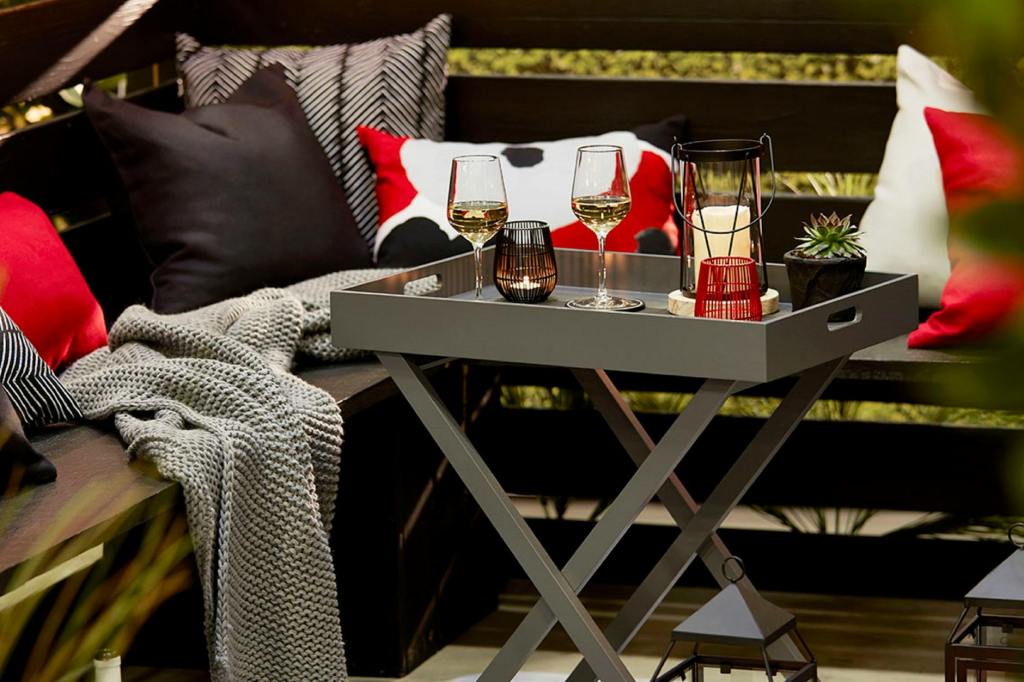
6 Contrast
Contrast adds drama and dimension. It’s the interplay between opposites—light and dark, rough and smooth, modern and rustic.
Example: Matte black fixtures against crisp white tiles. A soft wool rug atop polished concrete. That push-and-pull creates energy.
Quick Tip: Add throw pillows in contrasting colors or materials—like velvet and linen—to break visual monotony.
7 Details (Finishing Touches)
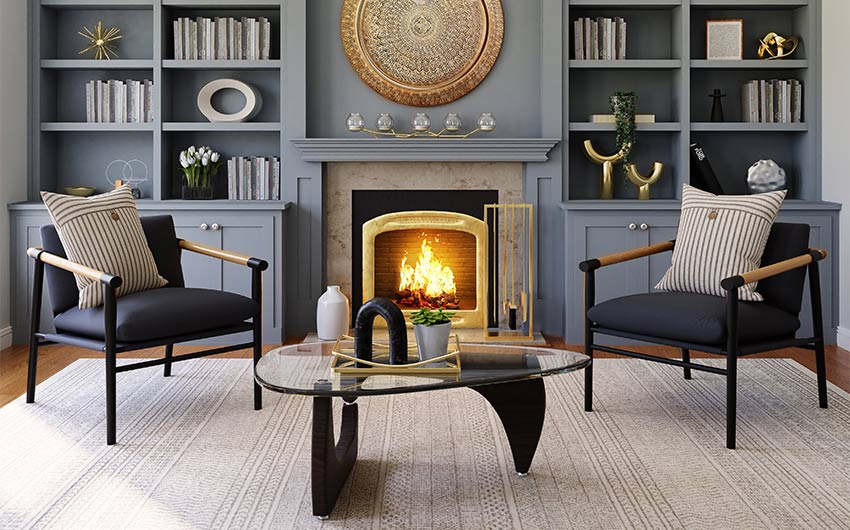
Definition: Details are the small, often overlooked elements that bring a room together—your design’s punctuation marks.
Example: Brushed brass handles, layered textiles, thoughtful styling on open shelves. These are the flourishes that elevate a space from okay to outstanding.
Quick Tip: Upgrade the little things—cabinet knobs, curtain rods, light switch covers. They’re subtle, but they whisper quality.
Why These Principles Matter
Interior design isn’t just about making a room look good—it’s about making it feel right. The seven principles you’ve just explored aren’t random rules. They form a complete design language—one that speaks in comfort, function, beauty, and flow.
When balance grounds a room, harmony ties it together, rhythm guides your eye, and proportion keeps it practical—you feel it. Add contrast for spark, emphasis for direction, and details for polish, and suddenly your space isn’t just a room—it’s an experience.
Whether you’re redecorating a whole home or simply styling a shelf, these principles act as your compass. Start noticing them in your space: Is your sofa too large for the room? Is your color palette cohesive? Does the eye know where to rest?
Design isn’t reserved for professionals. With these principles in mind, you’re already halfway to transforming your home with intention.
Further Reading & Resources
Want to dive deeper into design theory or see how the pros use these principles in action? Check out these trusted resources:
- ABI Interiors – “The 7 Principles of Interior Design”
Covers: Balance, Unity, Rhythm, Emphasis, Contrast, Scale & Proportion, Details - Kathryn Interiors – “The 7 Basic Principles of Interior Design”
Reiterates all seven principles clearly and concisely - Foyr – “7 Elements and Principles of Interior Design & Basic Concepts”
Explores the principles in the context of design elements - Boco Interior Designs – “Interior Design Concepts | 7 Principles…”
Provides real-world examples for each principle - Medium (Jubayer Ahmad) – “7 Core Principles of Interior Design”
Offers practical descriptions and terminology - IssueWire – “The 7 Principles of Interior Design – From Balance to Contrast”
Reinforces the standard list with concise definitions
Ready to transform your space? Start small—pick one principle, like rhythm or contrast, and try it out in your favorite room. Maybe it’s adding a bold pop of color or rearranging furniture to create better flow. You’ll be surprised how even subtle shifts can elevate your space.
Show us your style!
Tag us in your home updates or inspiration boards on Pinterest—we’d love to see how you bring balance, beauty, and boldness to your home.



 Hind Finds
Leave a reply to Understanding Color Theory for Home Painting – Hind Finds Cancel reply